What is the Owlstone detector?
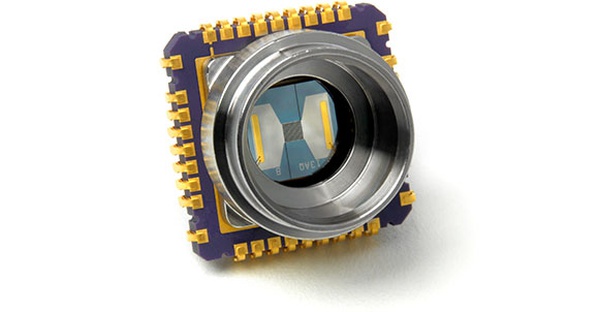
The Owlstone detector is a revolutionary button-sized device that can be programmed to detect a wide range of airborne chemical agents that may be present in extremely small quantities.

The detector is manufactured exclusively by Owlstone and made available on an OEM basis to other third-party application developers. These developers, in turn, integrate the detector into their own chemical sensing products and solutions.


There are thousands of applications - across industries from security and defense to automotive and healthcare - that depend on the rapid, accurate detection and measurement of chemical compounds.


What benefits does the Owlstone detector offer over other sensing technologies?
Using leading-edge nanofabrication techniques, Owlstone has created a complete chemical detection system a hundred times smaller and a thousand times cheaper than other currently available devices.


Compared with other current ion mobility spectrometry (IMS) sensing technologies, Owlstone offers a unique combination of benefits. These include size and weight, reliability, sensitivity, response speed, low power consumption, reduce false positives, versatility and manufacturing cost.

-       Size and Weight: the Owlstone sensor is fabricated on a single chip with linear dimensions of just under a centimeter.

-       Reliability: the Owlstone sensor is a solid state device with no moving parts. It's immune to the effects of mechanical vibration or sudden physical shocks - making it ideal to cope with the rigors of real-world environments from airports and battlefields to factory floors.

-       Sensitivity: the sensor can typically detect chemical agents in concentrations as low as a few parts per billion.

-       Response Speed: the extremely small size of the sensor means that it can respond to the presence of chemical agents far quicker than larger diffusion-type detectors.

-       Low Power Consumption: Operating at low voltages, the detector's solid state design ensures that it consumes far less electrical power than conventional ion mobility spectrometry (IMS) sensors.

-       Reduced False Positives: The sensor's ability to discriminate accurately between different chemical compounds means that anomalous 'false positive' alerts are minimized.

-       Versatility: it's easy to adapt the sensor's ability to detect other threats through changes to on-board software and signal processing alone. The same core technology can therefore be applied to meet application needs across a wide range of market areas and industries.

-       Cost of Manufacture: each sensor can be fabricated at a cost of less than five US dollars - a fraction of the cost of other detector technologies. This makes Owlstone detector technology particularly attractive for high-volume consumer applications, ranging from personal medical care and monitoring to smoke detection.


How does the Owlstone detector work?

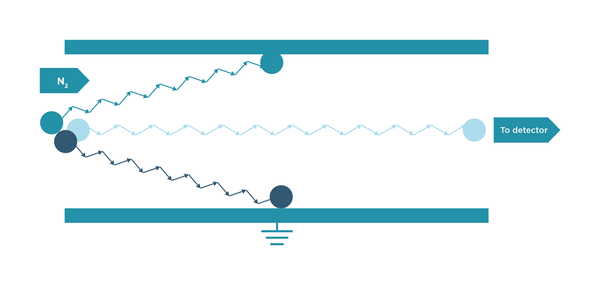
The solid-state detector is based on patented innovations that allow a complete analytical sensor to be built on just two silicon chips - one for the sensor itself, and the other for it’s associated electronics, together with an ionization source. With this patented technology - known as Field Asymmetric Ion Mass Spectroscopy (FAIMS) - gas is ionized and passed through the sensing chip. By programming the device with suitable drive signals, individual gases can be detected quickly in very small quantities. The way the sensor is built means that the cost can be very low for the performance achieved.


How is the detector manufactured?
The detector is fabricated on a microscopic scale, using lithographic techniques where the sensor components are etched on a silicon substrate (MEMS), much like the manufacture of a microprocessor. This offers a number of distinct advantages over other chemical sensor technologies - notably size, cost and ease of mass production - as well as the sensor's ability to be programmed for a particular application.


What applications can the Owlstone detector be used for?

The range of applications for Owlstone chemical sensing technology is virtually limitless. Any application that depends on the rapid, cost-effective detection of organic and inorganic chemical agents - whether airborne or in solution - can potentially benefit from Owlstone's advanced, patented technology. Initially, Owlstone technology is being targeted at [four/five] key application areas, namely Defen
se and Security, Medical and Diagnostic, Industrial, Automotive, Environmental and Consumer.


Can the core technology in the Owlstone detector be adapted to detect the presence of any chemical compound?
The detector's drive signals and signal processing can be 'fine tuned' to recognize the unique signature of a virtually any gas - or range of gases - whether airborne or dissolved in water or other fluids. This makes the detector exceptionally versatile, as well as making it even more cost-effective to manufacture the device in large quantities to meet a wide range of application requirements.


Can the detector detect multiple threats at the same time?

Yes. The detector generates a continuous 'spectrum' of information about any chemical agents in its presence. The unique molecular signatures of several chemical compounds can thus be identified simultaneously, making the sensor even more versatile in a wide range of defense/security, medical and industrial applications.


Will the detector's ability be undermined by the development of new, artificially synthesized chemical agents that can't be detected?
No. Any chemical compound - whether naturally occurring or man made - bears a characteristic molecular 'fingerprint'. This individual signature can always be detected using appropriate sensor drive signals and signal processing.


Where can I get hold of an Owlstone sensor? And what's the timeline for availability of commercial products and applications based on the Owlstone detector?

The Owlstone detector is available to OEMs (Original Equipment Manufacturers) who integrate the device into their own products, systems and applications.


Owlstone is interested in discussing requirements further with OEMs to implement laboratory and field tests with our portable test platform. A second generation test platform will be available in October, allowing partner OEMs and systems integrators to develop their own applications based on the Owlstone detector '. It is anticipated that the first wave of commercial products will be available during 2006. Potential development partners are invited to contact Owlstone now.


When was the company established?
The research began at the University of Cambridge in 2001 by three engineering researchers; Andrew Koehl, David Ruiz-Alonso, Billy Boyle.  They subsequently spun out in early 2004.


Why is this technology so relevant now?
Existing technologies cannot meet the challenge of chemical and explosive detection in transport networks, government buildings, public spaces, financial institutions etc. The reality of the threat against such targets demands a generational leap in technology capability and a dramatic reduction in cost. Recent atrocities graphically illustrate security gaps, Owlstone aims to use its technology to provide safety where it is needed most.


What is FAIMS?

The Owlstone detector implements an analytic technique called high-field asymmetric waveform ion mobility spectrometry (FAIMS). The approach sorts compounds according to how their charged forms move through a gas when subjected to electric fields. Each substance has its own characteristic smell, or fingerprint. The Owlstone detector acts as a filter; compounds of interest are filtered and detected, while interferants are screened out.


How would these sensors be deployed, in a train station for example?  
A small and cheap detector opens up a range of deployment scenarios, from very small disposable sensor applications to rugged fixed installations in oil rigs.


The cost reduction in wireless technology, coupled with the power of the Owlstone detection technology, enables applications previously unfeasible or prohibitively expensive. For example, arrays of sensors could be dropped from military jets onto a battlefield to create an intelligent detection network capable of identifying and tracking threats.

The small form factor of the sensor would make it possible to connect directly to a mobile phone, which could provide computing power for a non-invasive diagnostic tool to diagnose disease and illness by detecting chemical markers on the breath.


The deployment and interface possibilities are endless and 'working with integrator partners' Owlstone will address the needs of multiple high value markets which demand cutting edge detection solutions.


What is the relationship with the University of Cambridge?

Owlstone has no formal linkage to the university but still has a very close relationship with many world class personnel located there.


© Owlstone Nanotech, Inc. 2005 

Safe Harbor Site Disclaimer Site Map